

Wolfy casino Plinko game
Introduction
I look at Plinko differently from the way it is usually presented on casino pages. At first glance, Wolfy casino Plinko seems almost too simple to deserve a long analysis: you choose a stake, set a risk level, drop a ball, and watch it bounce through a field of pegs until it lands in a multiplier slot. That is the visible layer. The real reason this format keeps attracting attention is deeper. Plinko compresses tension, randomness, speed, and decision-making into a very short cycle. In practical terms, that means a player can understand the interface in seconds but still misread the actual pace and exposure of the session.
That contrast is exactly why the game deserves a closer look. Plinko does not behave like a classic slot, and it does not feel like roulette, crash, or Wolfy Casino blackjack overview for players either. It sits in a separate category where the visual simplicity can hide very different outcomes depending on row count, risk setting, and betting discipline. I have seen players treat it as a harmless casual distraction, then realize too late that a high-risk configuration can swing a bankroll faster than many reel-based products.
For Canadian players exploring Wolfy casino Plinko, the key question is not whether the game looks entertaining. It usually does. The more useful question is what kind of session it creates in reality: how fast results arrive, how often small returns appear, how rare top multipliers truly are, and whether that rhythm matches the player’s expectations. That is what I will break down here.
What Plinko is and why it draws so much attention
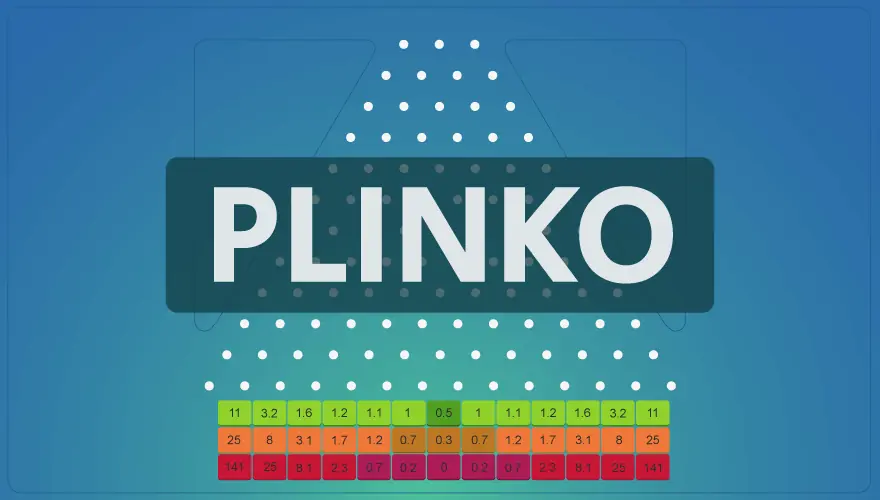
Plinko is a chance-based casino game built around a vertical board filled with pins. A ball drops from the top, hits pegs on the way down, and changes direction repeatedly before landing in one of several prize slots at the bottom. Each bottom slot carries a multiplier. Lower multipliers usually sit near the center, while the highest multipliers tend to be placed on the far edges, where the ball reaches less often. Mobile players should have a look at Wolfy Casino mobile access for real money players before installing anything.
The reason Plinko became so noticeable is not just its visual familiarity. It offers a format that is instantly readable. A new player does not need to learn paylines, card values, Wolfy Casino bonus page for detailed casino comparison symbols, or strategy charts. The entire experience is transparent on the surface: one drop, one path, one result. That clarity lowers the entry barrier. At the same time, the path of the ball creates suspense in a way that static instant-win formats rarely do.
There is also a psychological detail that matters. In slots, many players focus on symbols and bonus triggers. In Plinko, attention shifts to movement. You are not just waiting for an outcome; you are watching it develop peg by peg. That makes each round feel active, even though the result is still governed by a random number system. One of the more interesting things about Plinko is that it often feels more “physical” than other digital Wolfy Casino games before making a deposit, despite being algorithm-driven underneath.
On Wolfy casino, Plinko stands out because it fits modern player habits. Many users now prefer short rounds, clear controls, and immediate feedback. Plinko delivers exactly that. It is easy to launch, easy to repeat, and easy to misunderstand if someone assumes simple visuals automatically mean low intensity.
How the Wolfy casino Plinko mechanic actually works
The basic structure is straightforward, but the practical logic deserves careful attention. In Wolfy casino Plinko, a round begins when the player sets a stake and chooses parameters such as risk level and, in many versions, the number of rows. Then the ball is released from the top of the board. At each peg, it deflects left or right until it reaches a payout slot at the bottom.
What matters is that the board is not just decoration. The layout creates a distribution pattern. Results closer to the center are statistically more common, while extreme edge outcomes occur much less frequently. This is why the most attractive multipliers are placed at the edges. The game is built around a trade-off: frequent modest returns versus rare large hits.
Risk settings reshape that trade-off. In low-risk mode, the multiplier spread is usually compressed. That means fewer dramatic outcomes, more stable returns, and a gentler session profile. In high-risk mode, the center may become less rewarding and the edge multipliers much larger. The board then starts behaving in a way that feels far more volatile. The visual action is the same, but the bankroll impact can become completely different.
Row count, where available, adds another layer. More rows generally mean a longer path and a broader payout range. Fewer rows often create a simpler distribution with less dramatic extremes. This is one of the most important practical points for any player: the same Plinko screen can produce a very different experience depending on how the settings are configured before the first drop.
| Element | What it changes | Why it matters in practice |
|---|---|---|
| Stake size | The monetary value of each drop | Directly affects session cost and how quickly funds move |
| Risk level | The spread between common and rare multipliers | Changes the balance between steadier play and sharper swings |
| Rows | The length and complexity of the ball’s path | Often alters the payout distribution and top-end potential |
| Auto-play pace | How quickly rounds repeat | Can accelerate losses or compress variance into a short period |
A useful observation here is that Plinko often gives players a false sense of control. Choosing rows and risk level feels strategic, but these settings do not create an edge over the house. They only shape the type of randomness you are exposed to. That distinction is essential.
Why the game feels engaging and how its session tempo works
Plinko is built for rhythm. A single round is short, visually readable, and emotionally compact. You place a stake, release the ball, watch a few seconds of movement, and immediately see the multiplier. That loop is one of the game’s strongest hooks. It removes downtime almost completely.
In a practical session, this speed can work in two opposite ways. For some players, it makes Plinko accessible and efficient. There is no waiting for bonus rounds, no lengthy animations, and no need to interpret a complex paytable. For others, the same speed becomes the main pressure point. Because each drop resolves quickly, it is easy to place far more rounds than intended in a short session.
This is where Wolfy casino Plinko differs from many traditional products. The tension is not based on building toward a feature round. It comes from repeated micro-decisions and the possibility that the next ball could land on either a weak return or a rare premium multiplier. The game creates anticipation without requiring narrative progression.
One thing I find especially notable is that Plinko can feel calm and stressful at the same time. The interface is minimal, the rules are simple, and there is no sensory overload. Yet the uncertainty of each bounce keeps the player mentally engaged. That contrast helps explain why the format has become more than a passing trend.
Risk profile, probability logic, and who should approach with caution
Plinko is a random game, but not a random game in the way many players instinctively imagine. The outcome distribution is not flat. It is weighted toward more common central results, while the largest multipliers sit in the least frequent landing zones. In plain terms, the top prizes are there to define the excitement of the board, not to appear regularly.
That is why probability matters more here than the visuals suggest. Watching a ball bounce near a high multiplier can create the feeling that it “almost” got there, but near-misses do not indicate that a large hit is getting closer. Each drop is independent. The board may look physical, but the underlying logic remains governed by random outcome generation.
Players should also understand that high-risk Plinko can produce long stretches of underwhelming returns. This is not a flaw in the system; it is part of the design. The larger the gap between ordinary results and headline multipliers, the more uneven the session can become. If someone enters the game expecting a smooth balance curve, they may be disappointed quickly.
I would summarize the practical risk profile like this:
Low-risk mode usually offers a steadier flow of smaller returns, but top-end excitement is limited.
Medium-risk mode often provides the most balanced experience for players who want visible variation without extreme session swings.
High-risk mode is for players who accept that many drops may return little while a rare hit carries the session.
For bankroll-sensitive players, this distinction is not cosmetic. It determines how fast the session can turn. A common mistake is using a stake size that feels harmless under low-risk settings, then switching to high-risk without adjusting the amount. On paper, the stake is unchanged. In practice, the exposure is not.
What a player should know about rhythm, odds, and realistic outcomes
The most important expectation to set before launching Wolfy casino Plinko is that the game does not reward patience in a linear way. There is no built-in progression toward a better result just because a string of weak drops has already happened. This sounds obvious, but it matters because Plinko’s fast cycle can tempt players into “chasing shape” in the board, as if recent paths reveal a pattern. They do not. If bonuses are what you care about, real money VIP program breaks down every offer currently running.
Another practical point concerns return distribution. In many sessions, the majority of drops cluster around low multipliers. That can create a misleading impression that the game is constantly giving something back. Yet frequent small returns are not the same as meaningful profitability. A player needs to look at the balance after a sequence of drops, not just at how often the board lands above zero.
Here is the reality of Plinko in session terms:
Short sessions can feel dramatically different from one another because variance shows up quickly.
A few strong multipliers can change the whole result profile of a session.
Without strict limits, the speed of play can make losses accumulate quietly rather than dramatically.
That last point deserves emphasis. Slots often signal tension with sound, expanding reels, or feature countdowns. Plinko can drain a balance more quietly because the presentation stays clean and repetitive. It is one of the rare casino formats where the calm interface can disguise how aggressive the session pace really is.
| Play style | What the session usually feels like | Main concern |
|---|---|---|
| Low-risk, small stakes | Controlled, repetitive, less dramatic | Can become dull if the player expects big moments |
| Medium-risk, moderate stakes | Balanced, varied, easier to follow | Still capable of sudden swings over many drops |
| High-risk, aggressive stakes | Sharp, tense, outcome-driven | Bankroll can move very quickly in either direction |
How Plinko differs from slots and other casino games
The clearest difference between Plinko and classic slots is structural. Slots are built around reels, symbol combinations, bonus triggers, and payline or ways-to-win logic. Plinko strips all of that away. There are no symbols to track and no feature ladder to wait for. The entire proposition is concentrated into a single path from top to bottom.
Compared with roulette, Plinko offers more visual progression during each result. Compared with blackjack, it removes strategic decision pressure. Compared with crash games, it replaces timing choices with distribution-based suspense. That makes Plinko a hybrid in terms of player psychology: easy to understand, visually active, but still highly dependent on the selected risk profile.
What many players notice immediately is that Plinko feels less narrative than slots. There is no “base game versus bonus game” structure. Every drop stands on its own. For some people, that is a strength because it removes filler. For others, it becomes a weakness because the experience can feel repetitive if they prefer layered gameplay.
Another important difference is transparency. In slots, the mathematics are hidden behind symbols and features. In Plinko, the distribution idea is visible. You can see that the center is easier to hit and the edges are harder. That does not make the game predictable, but it does make its logic easier to grasp. In my view, this is one of Plinko’s most honest qualities.
Practical strengths and limitations of Wolfy casino Plinko
Plinko has several genuine strengths, but they are not universal strengths for every player. Its first advantage is clarity. You can understand the format almost immediately, which makes it approachable for newcomers. The second is pace. Sessions move quickly, and the game does not waste time on decorative layers. The third is flexibility. Risk settings and row options, when available, let players shape the style of variance they want to face.
Still, those same qualities create limitations. Fast rounds can encourage overplay. Simplicity can become monotony. Flexible settings can lead inexperienced players into configurations that do not match their bankroll or expectations. The game is not misleading in its design, but it can be misleading in its feel if someone judges it only by the clean interface.
I would break the practical strengths and weak points down like this:
Strong point: easy to learn without sacrificing tension.
Strong point: suitable for short sessions because outcomes resolve quickly.
Strong point: risk settings noticeably change the experience rather than acting as cosmetic options.
Weak point: repeated low-value results can feel flat, especially in conservative modes.
Weak point: high-risk play can distort a bankroll much faster than the calm visuals suggest.
Weak point: players who enjoy deep bonus structures may find the format too bare.
One memorable observation from extended Plinko sessions is that the game often reveals a player’s temperament faster than slots do. Some people immediately appreciate the clean, repeatable loop. Others realize within minutes that they need more layered interaction to stay interested. That makes Plinko unusually honest as a preference test.
What to check before starting a Plinko session
Before launching Wolfy casino Plinko, I would advise any player to check a few practical points rather than jumping in based on the game’s simple appearance.
Review the risk setting first. Do not treat low, medium, and high as vague labels. They can fundamentally alter the payout spread and session behavior.
Set a stake with speed in mind. Because rounds are brief, even a moderate bet can add up quickly over dozens of drops.
If rows are adjustable, test the feel before scaling up. More rows may increase the sense of suspense, but they also change how the board distributes outcomes.
Use demo play if available. This is one of the few formats where a short test session can genuinely help you understand whether the rhythm suits you.
Decide what kind of session you want. If you want controlled entertainment, a low-risk setup makes more sense. If you are chasing occasional large multipliers, accept that long quiet stretches are part of the deal.
That last point is more important than it sounds. Plinko tends to disappoint players who have not decided what they want from it. If someone expects stable returns and dramatic top hits at the same time, the session will feel wrong no matter what settings they choose.
Final verdict
Wolfy casino Plinko offers a very specific kind of casino experience: fast, visually clean, easy to understand, and capable of producing very different session profiles depending on the chosen risk level. Its biggest strength is not novelty alone. It is the way the game turns a minimal interface into a concentrated cycle of suspense and immediate feedback.
For the right player, that is a major advantage. Plinko suits people who prefer short rounds, direct controls, and a format where the logic is visible rather than buried inside reels and bonus systems. It can also work well for players who want to adjust the style of variance instead of simply pressing spin and accepting a fixed structure.
The caution point is just as clear. Plinko’s simplicity should never be mistaken for softness. High-risk setups can create sharp swings, and the speed of the format can make bankroll loss feel quieter than it really is. Anyone trying the game should understand that rare top multipliers are exactly that: rare. The board is designed to make those possibilities exciting, not routine.
My overall view is that Plinko is worth trying if you want a casino game built around pace, probability, and clean decision framing rather than symbols and feature rounds. It may not suit players who need strategic depth or long-form slot progression. But for those who appreciate a compact format with real tension beneath a simple surface, Wolfy casino Plinko has clear practical value and a distinct identity. Mobile players should have a look at Wolfy Casino legality review for mobile bonus and cashier checks before installing anything.
FAQ
How does Plinko work on Wolfy when the ball drops into the board?
A coin or ball is released from the top, then it bounces through the pegs and lands into a final slot at the bottom. Each slot corresponds to a multiplier, which is applied to the stake shown before launch. The whole result is determined by the game logic at the moment of release.
What is a common beginner mistake in Plinko, and how can it be avoided?
Pressing launch without re-checking the stake is the most frequent issue. Another common mistake is assuming a high multiplier from the last round will repeat, even when the ball drop is independent each time. Taking a quick look at the current stake and the selected mode before releasing prevents most errors.